Large Cistern
Between 1544 and 1547, Domenico dell’Allio had the Large Cistern built on the upper plateau of the Schlossberg as one of the first measures of the fortress construction.
It replaced an older water reservoir integrated into the medieval fortress. Rainwater drained from the surrounding roofs was filtered and collected in the 16 metres deep and equally wide structure.
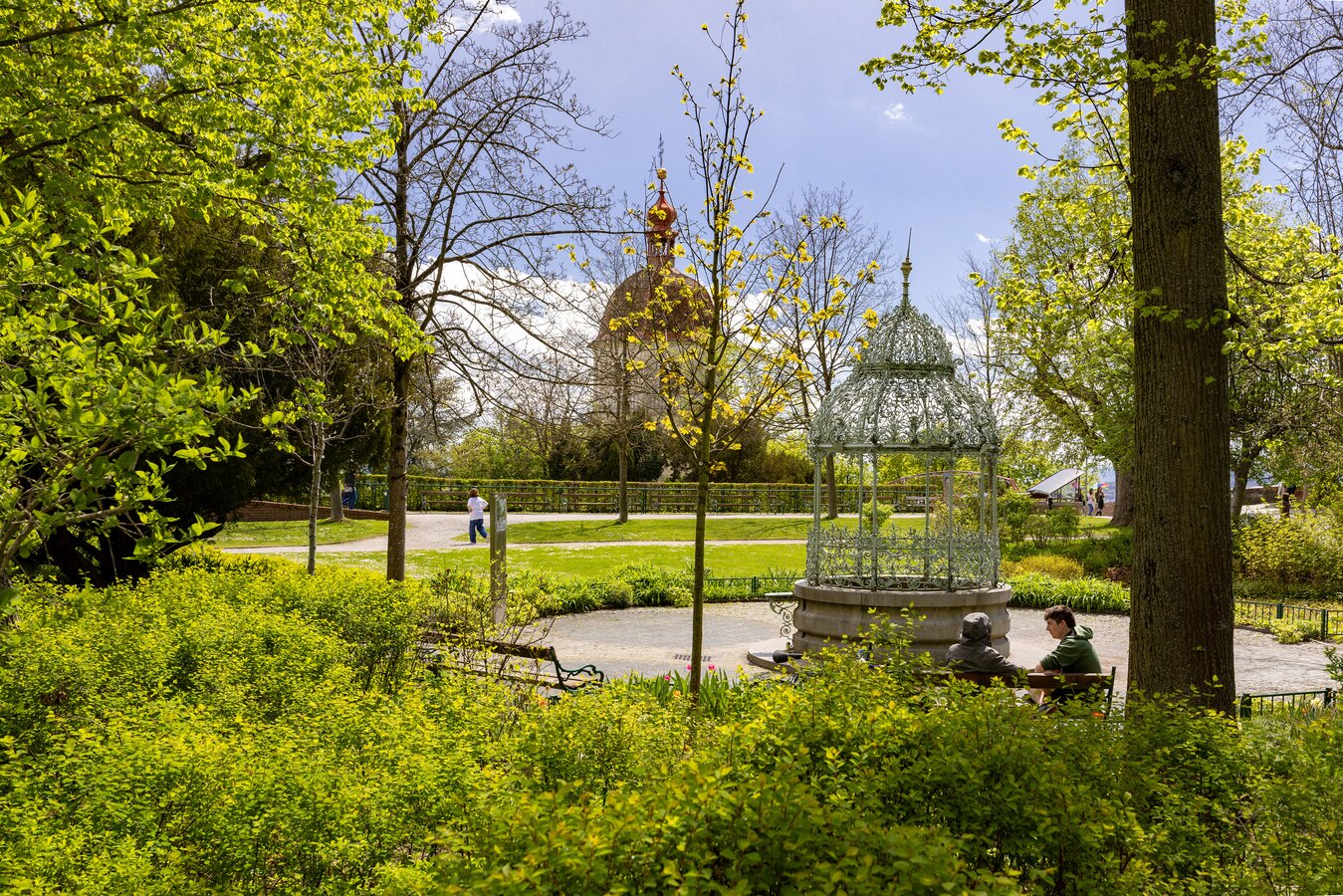
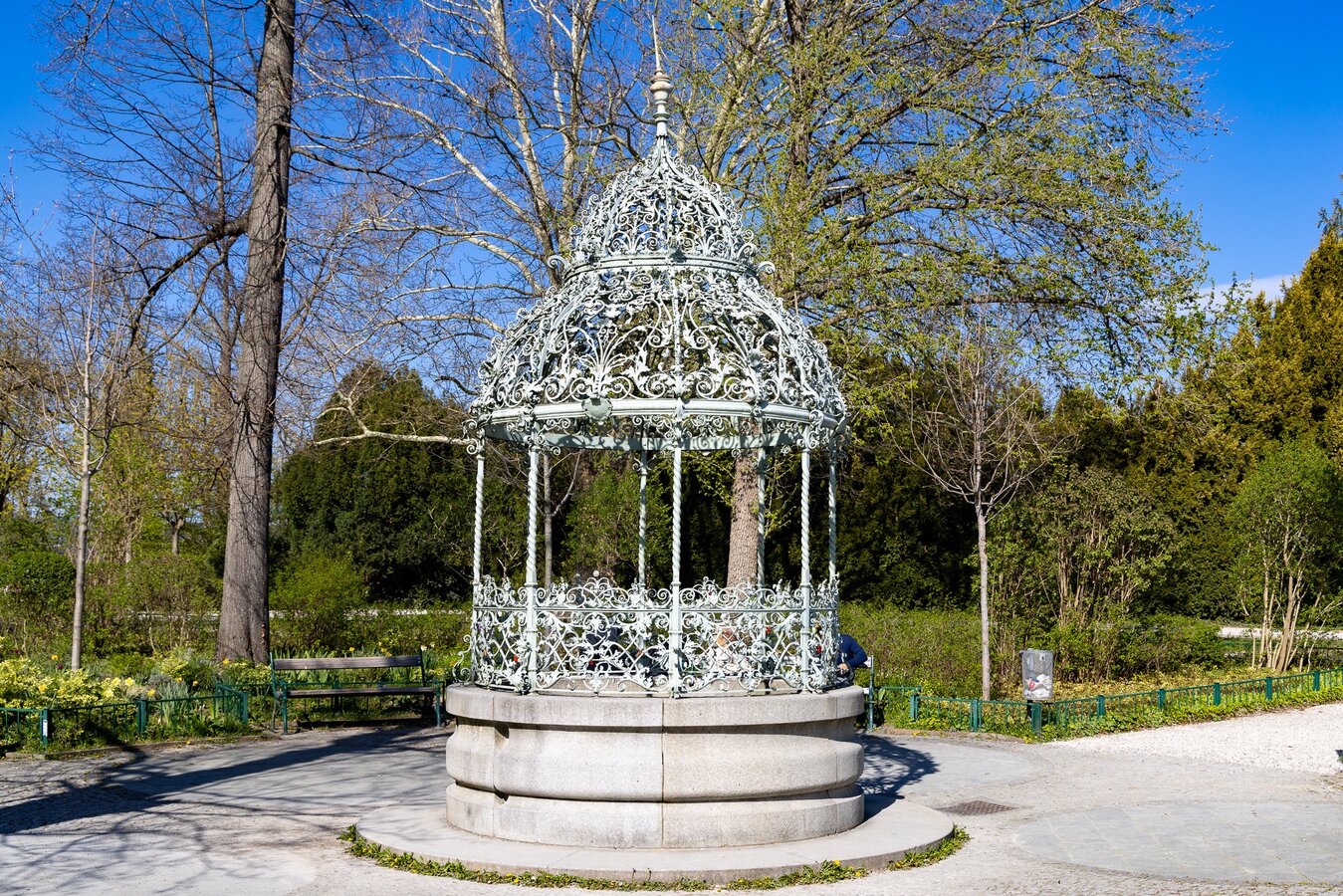
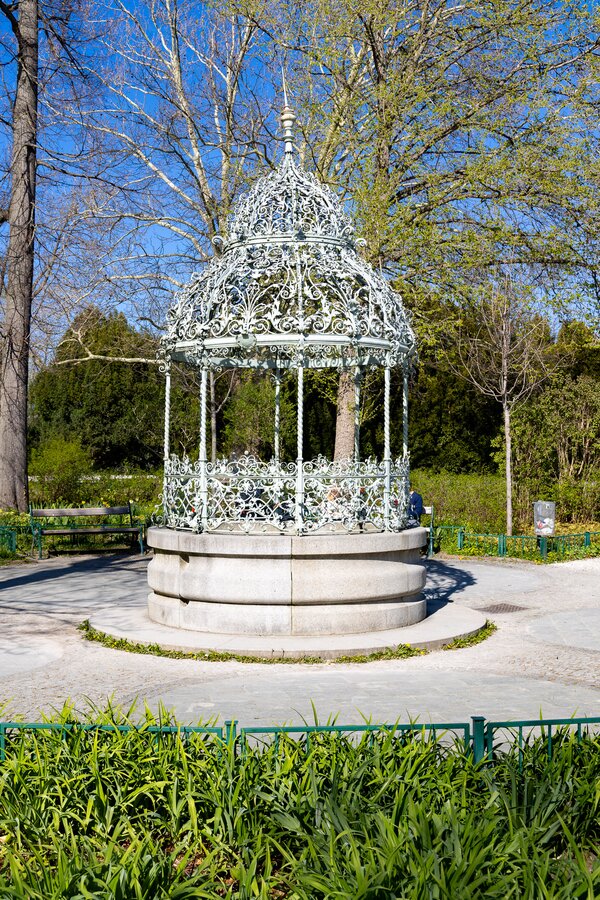
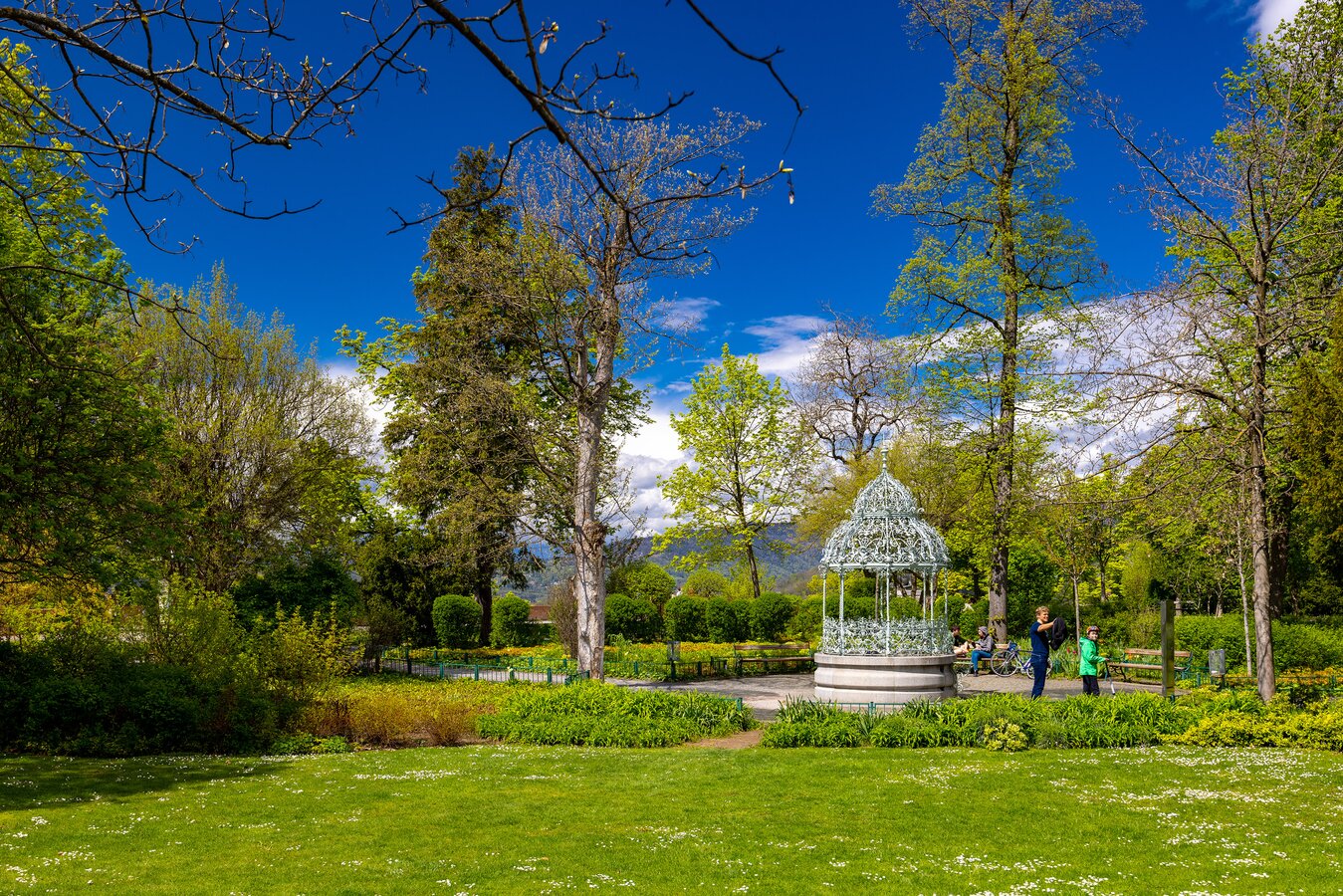
As it did not function satisfactorily, the heirs of the fortress builder, who died in 1563, had to adapt the cistern at their own expense from 1570 on. The stone wellhead dates from 1739, the wrought-iron superstructure by Conrad Lueff from 1897.
Today, the cistern is used as a fire-fighting water reservoir.

Good to know
The Great Cistern is situated on the summit plateau of Graz’s Schlossberg, close to the Hackher Lion, the Gothic Gate, and the Bell Tower. It can easily be included in a walking tour of the Schlossberg.
The Great Cistern was essential for supplying water to the fortress. Rainwater collected from the castle roofs was purified through an ingenious filtration system before being stored in five underground shafts. Without this reliable water supply, the fortress would not have been able to withstand long sieges.
Yes. The Great Cistern is located in the freely accessible area of Graz’s Schlossberg and can be viewed free of charge from the outside at any time.
The stone well surround dates back to 1739, while the elegant wrought-iron well pavilion was added in 1897. Together they give the Great Cistern its distinctive appearance and make it one of the most photographed landmarks on the Schlossberg.
Yes. The Great Cistern continues to serve an important purpose today as the emergency water reservoir for fire protection on the Schlossberg. Through a network of pipes and hydrants, it remains part of the hill’s modern fire safety infrastructure, making it not only a historic monument but also a functioning piece of infrastructure.
Domenico dell’Allio was one of the first Italian master builders to work in Graz and one of the leading military engineers of his time. In 1558, he was ennobled by Emperor Ferdinand I and chose the garlic (aglio in Italian) as his coat of arms.
He worked primarily in Graz, Klagenfurt, Vienna, Maribor, Ptuj, Radkersburg and Fürstenfeld. After the First Siege of Vienna in 1529, Emperor Ferdinand I recognised the importance of strong fortifications for defending his territories. As Graz played a key role in protecting the region from Ottoman expansion, the city was redesigned according to the latest military engineering principles. In 1545, dell’Allio was commissioned by the Styrian Estates to oversee the construction of Graz’s new fortifications, with the Schlossberg Fortress forming their central element.
Among his most important surviving works are the Paulustor and the Stall Bastion on the Schlossberg. One of his less successful projects was the original cistern on the Schlossberg plateau, which proved inadequate and had to be rebuilt after only twenty years. The reconstruction was financed from dell’Allio’s estate.
His most significant civilian building is the Graz Landhaus, a masterpiece of Northern Italian Renaissance architecture with its magnificent arcaded courtyard. It symbolised the growing self-confidence of the Protestant Estates in relation to the Catholic ruler and remains one of Graz’s most iconic historic buildings.
Picture gallery