Styrian wine routes near Graz
How can you combine a holiday in Graz with an excursion to Styria’s wine country?
Vineyards, traditional wine taverns, regional specialities and diverse landscapes: Visitors to Graz can easily combine a city break with an excursion to Styria’s wine country. Eight Wine Trails are spread across the three wine-growing regions of Southern Styria, Western Styria and Vulkanland Styria. The Southern Styrian Wine Trail and the Schilcher Wine Trail are particularly easy to reach.

The Styrian Wine Trails: key facts at a glance
- 8 Wine Trails lead through the wine-growing regions of Southern Styria, Western Styria and Vulkanland Styria.
- Easy to reach from Graz: The Southern Styrian Wine Trail is around 45 minutes away by car, while Ligist on the Schilcher Wine Trail can be reached in around 30 minutes.
- Culinary stops along the way: Wineries and traditional wine taverns invite you to enjoy wine, Brettljause platters and regional specialities.
- Explore wine country on foot: Various wine hikes connect vineyards, viewpoints and places to stop for refreshments.
- Stay overnight or return to Graz: You will find numerous accommodation options along the Wine Trails, while Graz also makes an excellent base for day trips.
By the way: You can also enjoy excellent Brettljause platters and Styrian wine in Graz.

The Wine Trails in Styria
Eight Wine Trails on one map
The map shows easily accessible starting points from Graz for all eight Styrian Wine Trails and provides a quick overview to help you plan your trip to Styria’s wine country.
Driving times from the city of Graz by car
- Southern Styrian Wine Trail: approx. 45 minutes to Ehrenhausen
- Schilcher Wine Trail: approx. 30 minutes to Ligist
- Sausal Wine Trail: approx. 40 minutes to Leibnitz
- Klapotetz Wine Trail: approx. 55 minutes to Arnfels
- Klöch Wine Trail: approx. 60 to 70 minutes to Bad Radkersburg
- Southeast Styrian Hills Wine Trail: approx. 70 minutes to Frutten-Gießelsdorf
- Thermenland Wine Trail: approx. 45 minutes to Riegersburg
- East Styrian Roman Wine Trail: approx. 30 minutes to Gleisdorf
Please note: The driving times indicated are approximate and calculated from Graz. Actual journey times depend on your starting point, your chosen destination along the Wine Trail and current traffic conditions.
Which wine roads are close to Graz?
South Styrian Wine Trail & Schilcher Wine Trail
South Styrian Wine Trail
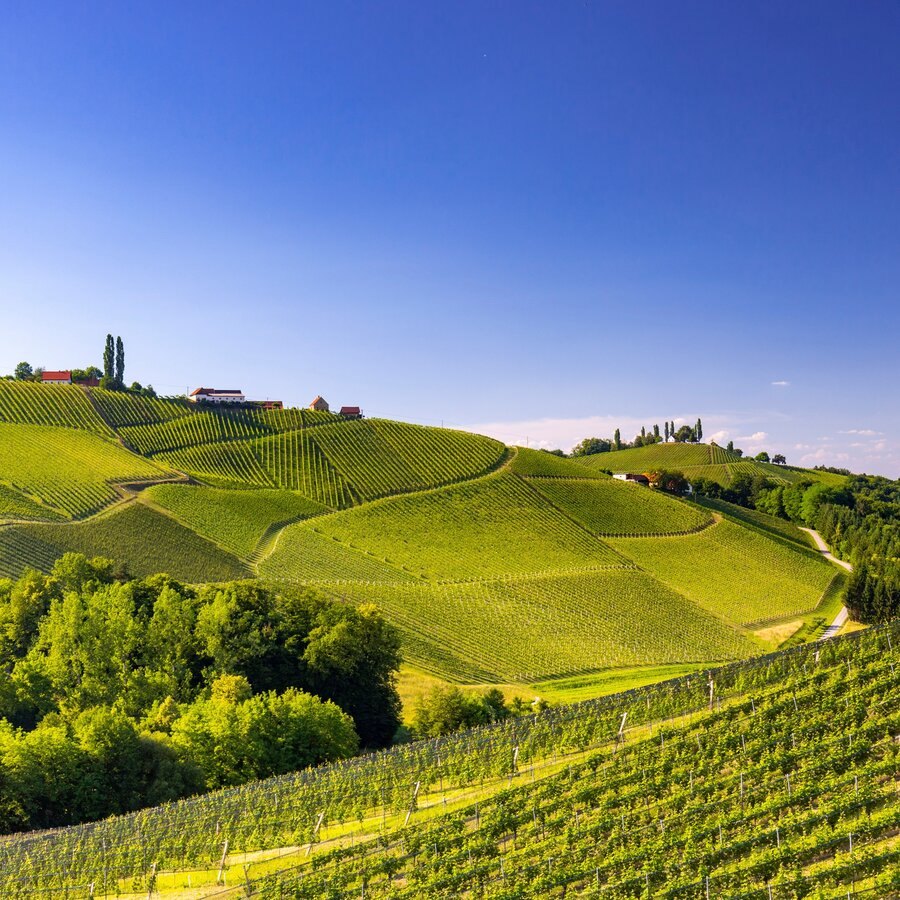
The South Styrian Wine Trail is the oldest and best-known wine road in Styria. Located around 45 minutes by car from Graz, it stretches for 25.5 kilometres and can be accessed from towns including Ehrenhausen, Gamlitz, Spielfeld and Leutschach.
Along the route, vineyards, small villages, wineries and traditional wine taverns alternate against a backdrop of rolling hills. The gentle hilly landscape around Gamlitz and Leutschach is also often referred to as the “Styrian Tuscany”.
- In the morning, you could enjoy a wine tasting at a winery. Check in advance whether you need to book.
- At lunchtime, stop at a traditional wine tavern for a Brettljause platter, Styrian scarlet runner beans and Styrian horseradish.
- In the afternoon, combine your excursion with a short wine hike or a visit to a viewpoint around Glanz and Leutschach.
Tip: Use the Wine Styria winery search to find wineries, Buschenschänken and accommodation in South Styria.
Schilcher Wine Trail
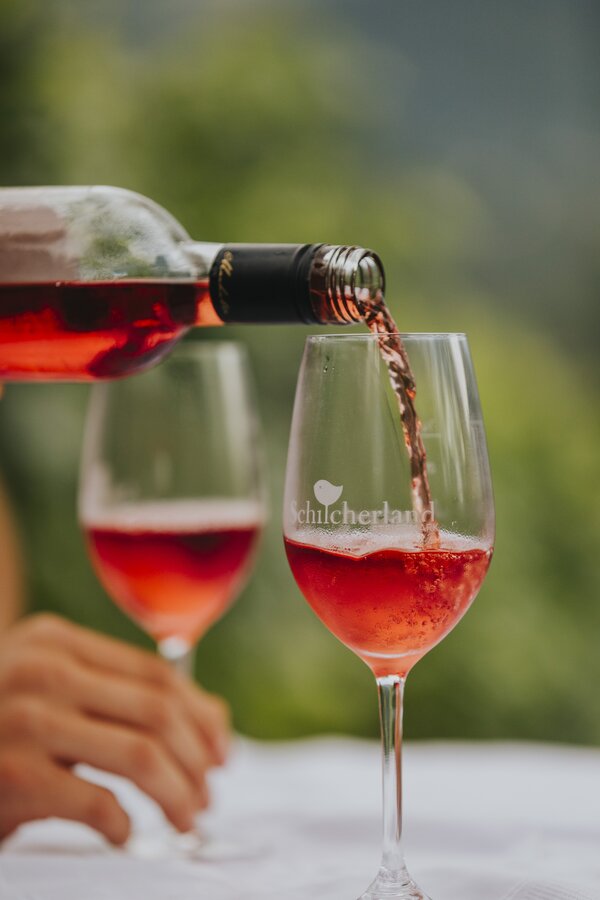
West of Graz, the Schilcher Wine Trail leads through the home of the Blauer Wildbacher grape variety, which is used to produce the distinctive rosé-coloured Schilcher wine. The wine road begins in Ligist and leads via St. Stefan ob Stainz and Stainz towards Deutschlandsberg and Eibiswald.
- The Wine Trail is named after Schilcher, a rosé wine typical of Western Styria and made from the Blauer Wildbacher grape variety.
- Along the Wine Trail, wineries and traditional wine taverns invite you to stop for tastings and refreshments.
- If you would like to add some exercise to your excursion, combine it with a culinary or themed hike in the Schilcherland region.
Which wine roads are there in Styria?
Eight routes through three Styrian wine-growing regions
There are eight Wine Trails in Styria, spread across the wine-growing regions of Southern Styria, Western Styria and Vulkanland Styria.
- South Styrian Wine Trail: Opened in 1955, it is the oldest wine road in Styria and stretches for 25.5 kilometres through South Styrian wine country. It can be accessed from Ehrenhausen, Gamlitz, Spielfeld and Leutschach.
- Schilcher Wine Trail: From Ligist, the Wine Trail runs through Western Styria as far as Eibiswald. The focus is on Schilcher wine made from the Blauer Wildbacher grape variety.
- Sausal Wine Trail: The route begins in Leibnitz and runs through the Sulm Valley towards Kitzeck im Sausal. Vineyards, steep slopes and sweeping views characterise this part of Southern Styria.
- Klapotetz Wine Trail: It lies between the Southern Styrian Wine Trail and the Sausal Wine Trail. It takes its name from the Klapotetz, one of the characteristic symbols of Styria’s wine country.
- Klöch Wine Trail: The 48.7-kilometre route leads north from Bad Radkersburg. The area around Klöch is known, among other things, for its Klöcher Traminer.
- Southeast Styrian Hill Country Wine Trail: The route begins in Frutten-Gießelsdorf and leads via Straden to St. Peter am Ottersbach.
- Thermenland Wine Trail: This route continues from the Klöch Wine Trail and runs through the Thermen- & Vulkanland Styria region.
- East Styrian Roman Wine Trail: The starting point is Gleisdorf. From there, the Wine Trail leads via Hohenberg and Gamling through Eastern Styria.
What can you experience along the Styrian Wine Trails?
Taste wine, enjoy regional specialities and hike through the vineyards
There are many ways to discover the Styrian Wine Trails: Visit wineries and traditional wine taverns, sample regional specialities or explore the wine country on foot. This makes it easy to tailor an excursion to Styria’s wine country to your interests.
Traditional wine taverns & Styrian cuisine
Where wine and regional specialities come together
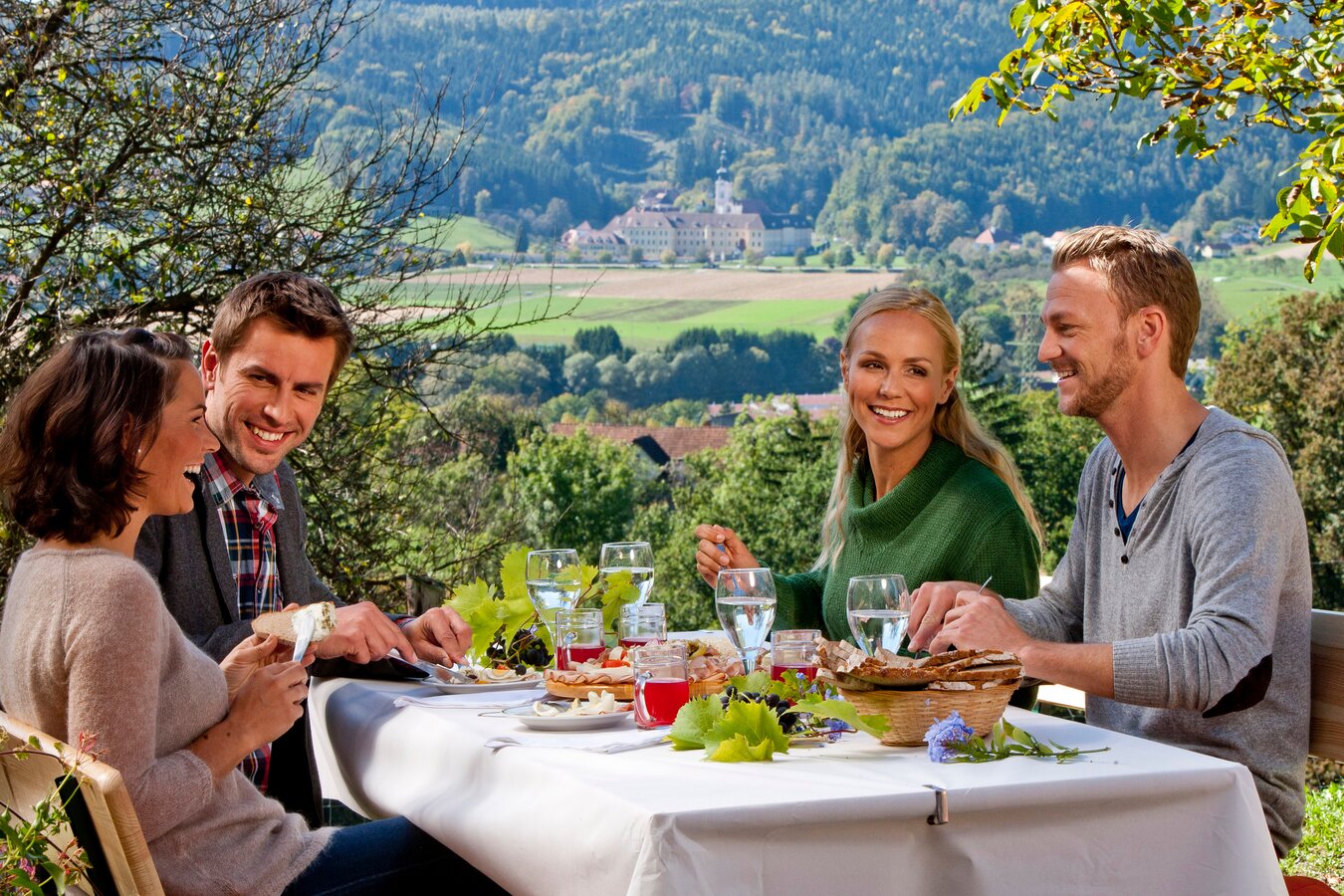
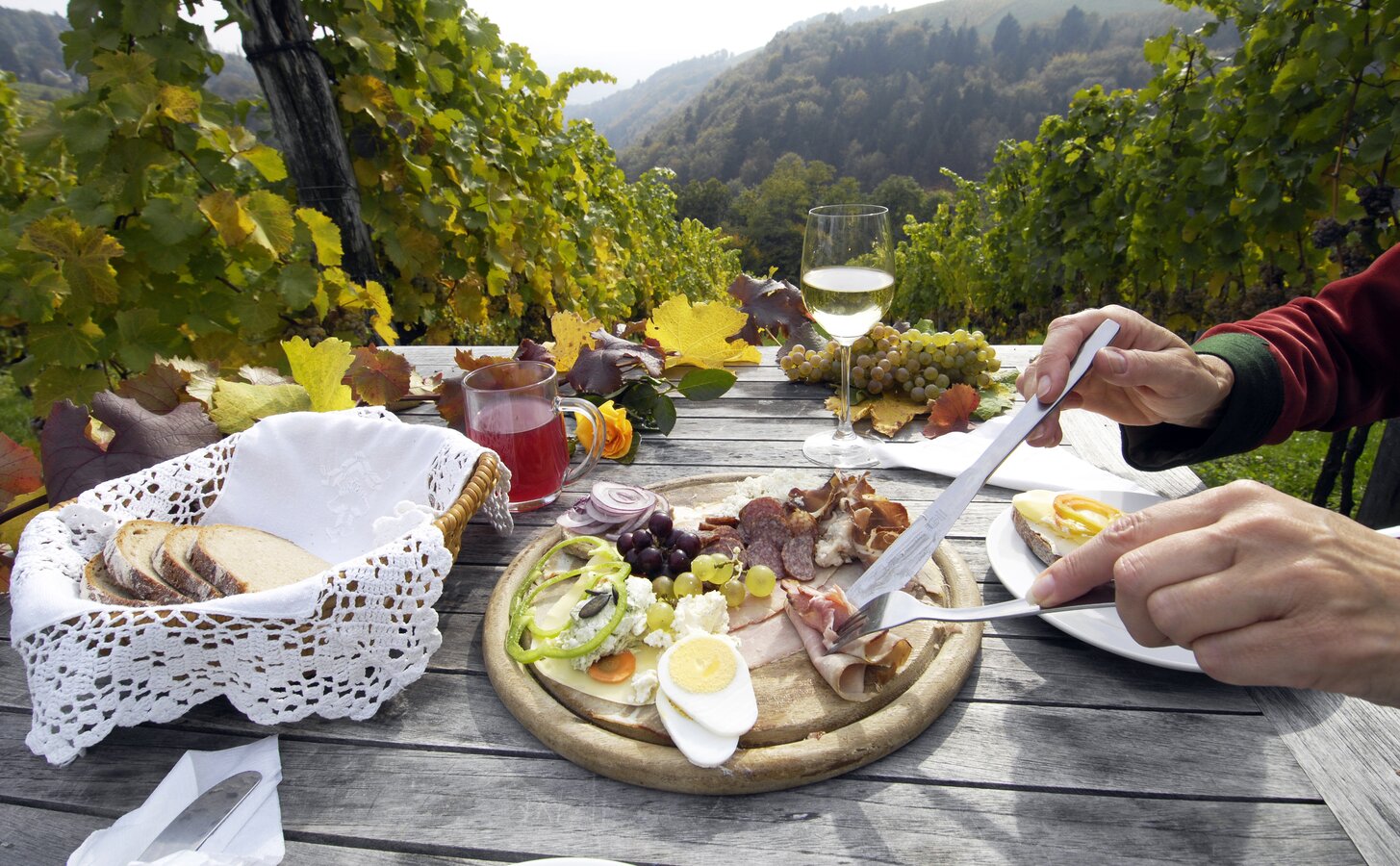
For many visitors, stopping at a traditional Buschenschank (= wine tavern) is an essential part of a trip to Styrian wine country. These wine taverns are run by local producers, who serve their own wines together with cold dishes.
A Styrian classic is the Brettljause, a platter of cold meats, cheeses and other regional products. Depending on the Buschenschank and its menu, you can also discover other local specialities. Styrian runner beans (Käferbohnen) and Styrian pumpkin seed oil are closely associated with the region’s cuisine.
If you are planning to visit a particular Buschenschank, check its current opening days and closing days before setting off.
Wineries & wine tastings
Discover Styrian wine where it is produced
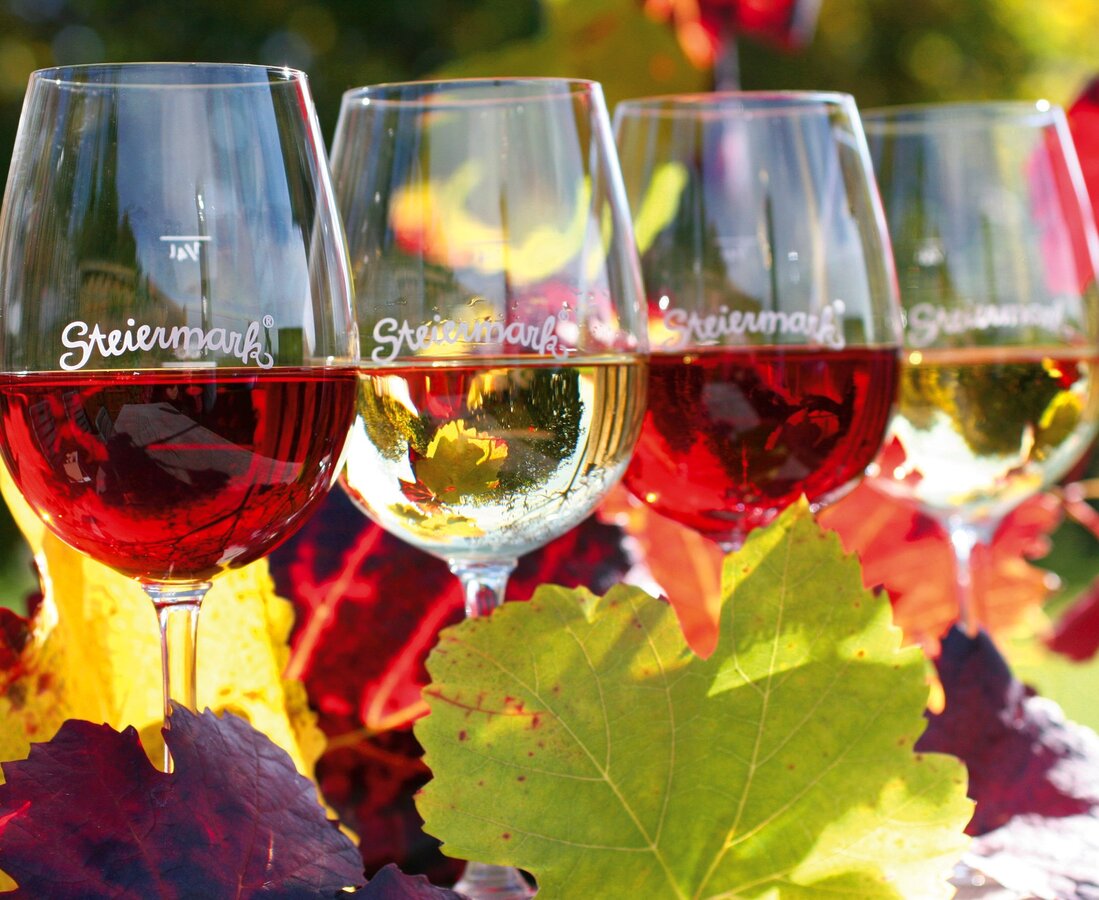
Numerous wineries are located along the Styrian Wine Roads. Many offer visitors the opportunity to taste their wines and learn more about wine-growing, grape varieties and the individual wine regions.
The tastings available and whether advance booking is required vary from winery to winery. It is therefore best to check directly with your chosen winery before your visit.
Hiking & wine hiking
Explore Styria’s wine country on foot
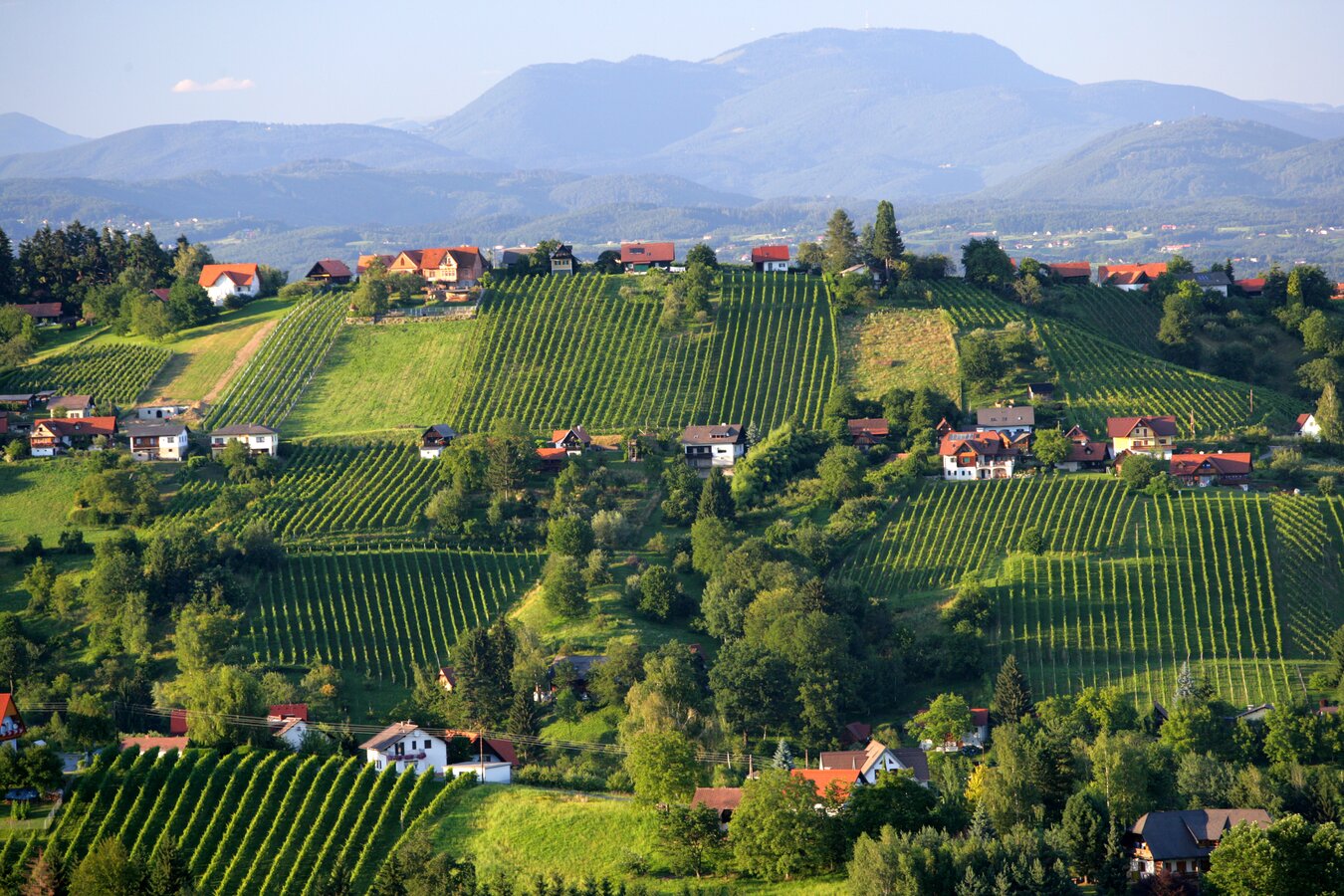
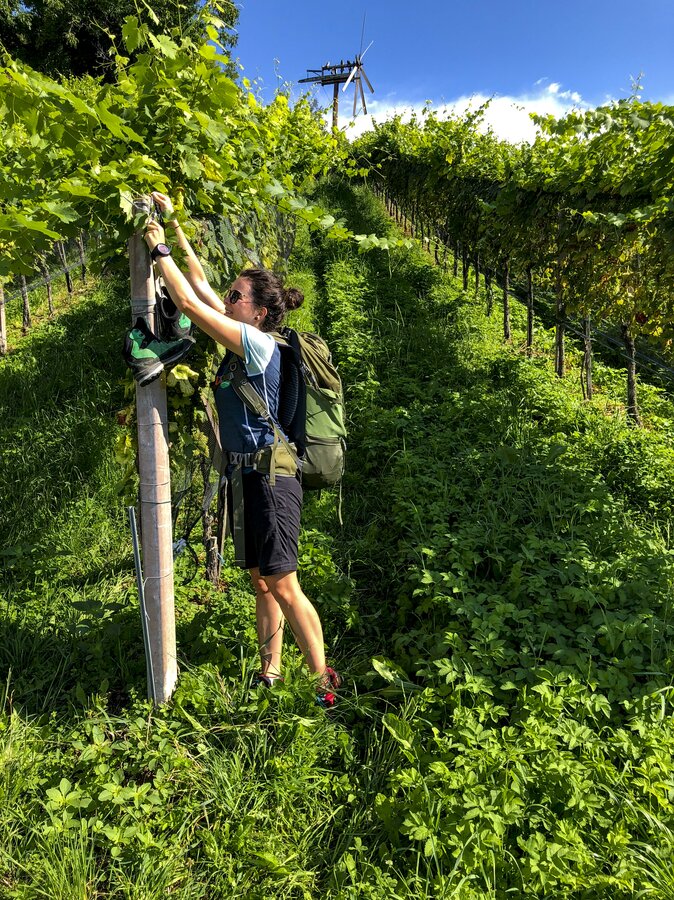
A wine hike in Styria combines outdoor activity with vineyard landscapes and places to stop for refreshments. Around the South Styrian Wine Trail, various routes lead not only through vineyards and across the region’s hills, but also to culinary producers and attractions.
There are also culinary and themed hiking trails in the Schilcherland region. Length and difficulty vary depending on the route, with options ranging from short walks to longer hikes.
If you simply want to enjoy the region’s specialities, a picnic in the vineyards is a great option. In autumn, don’t miss the stands serving Sturm (young wine) and roasted chestnuts.

The Klapotetz: a symbol of Styria’s wine country
Graz & wine country
Combine the city and wine region during your stay
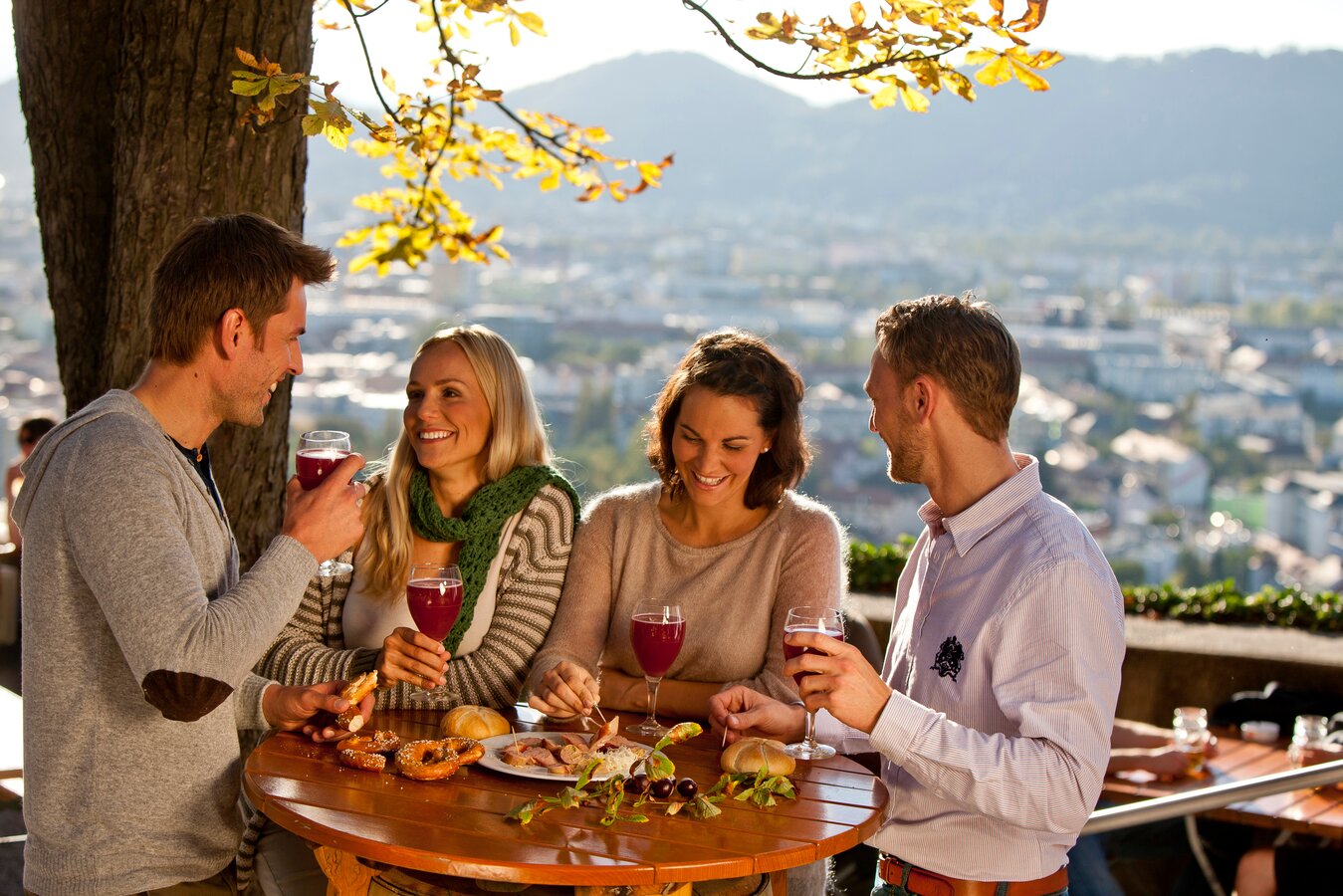
One day for the historic centre and Schlossberg, another for wineries, traditional wine taverns and wine hiking: this is an ideal way to combine the city and wine country during your stay.
Guided excursions to the Wine Trails from Graz
Discover wine country with a guide
A Wine Trail tour from Graz can be organised particularly well for groups and small groups. Graz Tourismus can assist with individually planned excursions to Southern Styria.
Depending on the programme, you can combine a guided hike, wine tasting, visit to an oil mill or stop at a traditional wine tavern. Dates and specific offers may vary depending on the season.
Accommodation along the Styrian Wine Trails
Use Graz as your base or stay overnight in wine country
During a holiday in Styria, Graz and the Wine Trails can easily be combined. If you stay in Graz, both the Schilcher Wine Trail and the Southern Styrian Wine Trail are within easy reach for a day trip.
In the wine region itself, the Wein Steiermark winery search provides accommodation options in Southern Styria. For a stay in the city, Graz Tourismus offers its own accommodation overview.


Frequently asked questions about the Styrian Wine trails
Planning a trip from Graz to Styrian wine country? Here you will find answers to frequently asked questions about the Styrian Wine Roads, getting there, Buschenschänken, wine and hiking opportunities.
The eight Wine Trails are spread across the three wine-growing regions of Southern Styria, Western Styria and Vulkanland Styria. The Southern Styrian Wine Trail and the Schilcher Wine Trail are particularly convenient for a day trip from Graz.
The Southern Styrian Wine Trail and the Schilcher Wine Trail are particularly easy to reach. The Southern Styrian Wine Trail is around 45 minutes away by car, while the starting point of the Schilcher Wine Trail is around 30 minutes away.
Well-known stops include Ehrenhausen, Gamlitz, Leutschach and Glanz an der Weinstraße. There are several viewpoints around Glanz, and part of the route runs directly along the Slovenian border.
Wine and harvest festivals, as well as other cultural and culinary events, regularly take place around the Wine Trail. Dates and programmes change every year and should be checked before your visit.
Various excursions to Southern Styria can be organised for groups and small groups. Graz Tourism can assist with planning and putting together suitable programme highlights.
Yes. Around the Southern Styrian Wine Trail and in the Schilcherland region, there are various wine, culinary and themed hikes. Many routes can easily be combined with a stop for refreshments.
The Styrian wine regions can be visited at different times of the year. However, the opening periods of wineries, Buschenschänken and restaurants vary according to the season. It is therefore advisable to check current opening hours before your trip.
In autumn, Sturm (young wine) and roasted chestnuts are among the seasonal culinary specialities on offer.
Schilcher is a rosé-coloured wine made from the Blauer Wildbacher grape variety and is closely associated with West Styria. Along the Schilcher Wine Trail, you can discover the wine-growing region and its culinary offerings.
A Buschenschank is a traditional tavern run by an agricultural or wine-growing business, where producers serve their own products. In Styrian wine country, Buschenschänken are an important part of the regional wine culture. Wine is typically accompanied by cold dishes such as a traditional Brettljause.


